For knowledge workers running on empty

Busy all day. Empty by evening.

One meeting, one email, one admin task after another. By the end of the day you're drained, your calendar ran you, and it's hard to say what any of it was for. I coach people out of that loop: back in charge of their time and energy, and doing more of what feels like theirs.

#12

Who I help

You work online, mostly from a laptop, often alone. You're good at your job and, on paper, everything's fine. But the days blur into each other, the pings never stop, and AI has you wondering what's actually yours to bring. You've tried the routines and the apps. You don't need another one. You need something to actually change.

Sound familiar?

The problem

The reactive loop

More effort, less energy, connection and expression. Then the cycle starts again.

  1. 01 · TriggerWork pressure + digital noise
  2. 02 · EscalatePerforming, consuming + fragmented self-optimisation
  3. 03 · DepleteDrained, isolated, less creative life
  4. 04 · EscapeDistraction, numbing or the next “fix”
  5. 05 · NarrowMore disconnection

…and round again

The cost: life becomes reactive. The “fix” keeps the loop going.

The way out: build your capacity, then collect lived evidence of a different response.

How I coach

The Human Capacity Flywheel

Four practices that feed each other. We start wherever it's easiest to get moving, then bring you back into the full loop.

rewriting the script
Human capacityMore ability to choose, connect and act as life changes.
01Attention ⇄ Focus
02Energy
03Belonging
04Expression
  • 01Attention ⇄ FocusFocus starts each turn: choose a direction before pressure and other people's priorities choose one for you. Attention closes it: notice what actually happened, learn, and re-focus.How we work on itHide examples
    • Take stock of where you are now: what's working, what isn't, who you feel you are.
    • Name three to five values in plain, everyday terms.
    • Audit your inputs: which apps, pings and feeds help, and which just leave you scattered.
    • Pick one boundary that protects your attention, and review what happened after you tried it.
  • 02EnergyRebuild the physical and emotional fuel to follow through.How we work on itHide examples
    • Get the basics back before any heroic routine: sleep, food, daylight, movement, rest.
    • A weekly energy check: what drains you, what restores you, what's non-negotiable.
    • Simple ways to shift state: a walk, breathing, music, time outside, cold water.
    • Make one keystone habit easy, so the rest of life has more room.
  • 03BelongingPeople who know you, support you and challenge you, beyond what you're useful for.How we work on itHide examples
    • Map your people: who restores you, who drains you, who's missing.
    • One deliberate invitation, reconnection or honest ask for help.
    • Build something recurring with others that isn't work or the pub: training, walks, music, making.
    • Clearer boundaries and more honest conversations.
  • 04ExpressionMake, contribute, play. Create instead of just consuming.How we work on itHide examples
    • Find the thread that still gives you energy: a project, a skill, a curiosity.
    • Protect a weekly "make, don't consume" block.
    • Run tiny experiments: write, play, build, host, share something imperfect.
    • Decide where AI helps, and where doing it yourself is the point.

Each area also builds your capacity on its own, through lived evidence: “I can do this.”

How we work through it: rewriting the script

We all run on scripts we picked up along the way: "I have to say yes", "rest is lazy", "I'm just not creative". In every part of the flywheel we start by noticing the script you're running, in your own words. I listen, ask questions and reflect it back, so you can see it clearly, keep what serves you and rewrite the parts that keep you stuck.
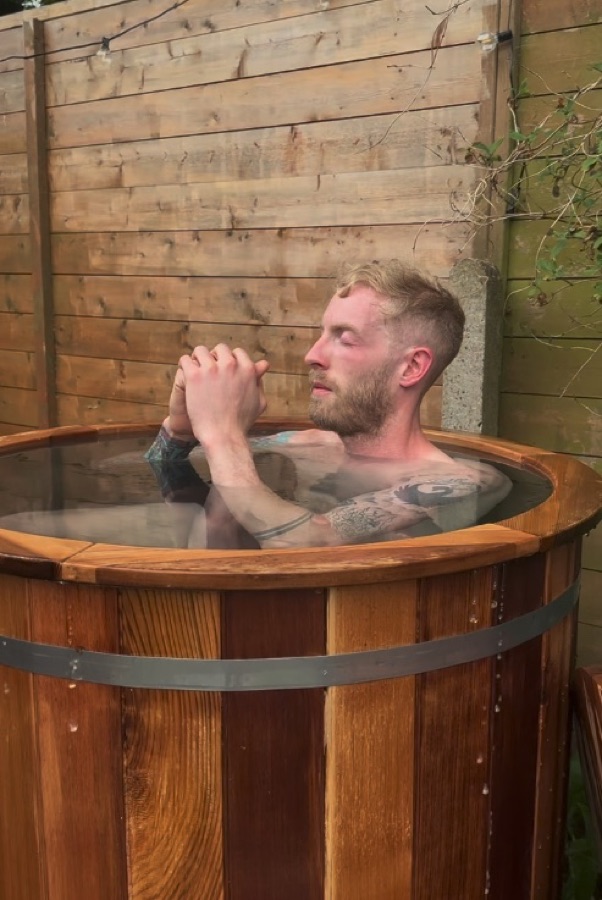
Alan sitting in an ice bath, eyes closed
Hi! I'm Alan!

Who I am

I've been on that wheel.

I'm Alan. I spent ten years in an office job, then built my own agency, grew it to six figures, and burned out. Getting back on my feet led me to the simple things that still hold me together: movement, cold water, the sauna and meditation.

Later, as a director managing people and clients, I had steadiness again, along with back-to-back meetings and a growing sense of being out of alignment. For years, a big part of my job has been coaching the people on my team through exactly that.

Now I work for myself, deliberately built around energy and purpose. I coach people who are where I was.

How it works

A 12-week, one-to-one coaching programme. It's a beta, so it's small, personal and shaped around what you need.

  1. 1Fit chat20 minutes, free, to get to know each other and see if we're a fit to work together. No pressure either way.
  2. 2Roadmapping sessionWe map your actual week: the pressures, the people around you and what you want to be different. A short scorecard across the flywheel gives us a baseline and shows where to start.
  3. 312 weeks of coachingA conversation every two weeks, plus one quick check-in between sessions on a channel we agree. We work on the part of the flywheel that matters most right now, and adapt as life happens.
  4. 4A practice you keepShort guides and exercises made for whatever each cycle needs, not a course to sit through. You learn your early signs of drift and leave with a practice you can run without me.

Every two-week cycle

  1. Review a real situation from your week
  2. Explore the pattern and what it's costing you
  3. Choose one small experiment
  4. Make it workable: when, what might get in the way, what support you need
  5. Learn: keep it, adapt it or drop it

I'm taking a small group of beta clients.

If this sounds like you, let's have a no-pressure chat and see if it fits.

Book a fit chatGet in touch